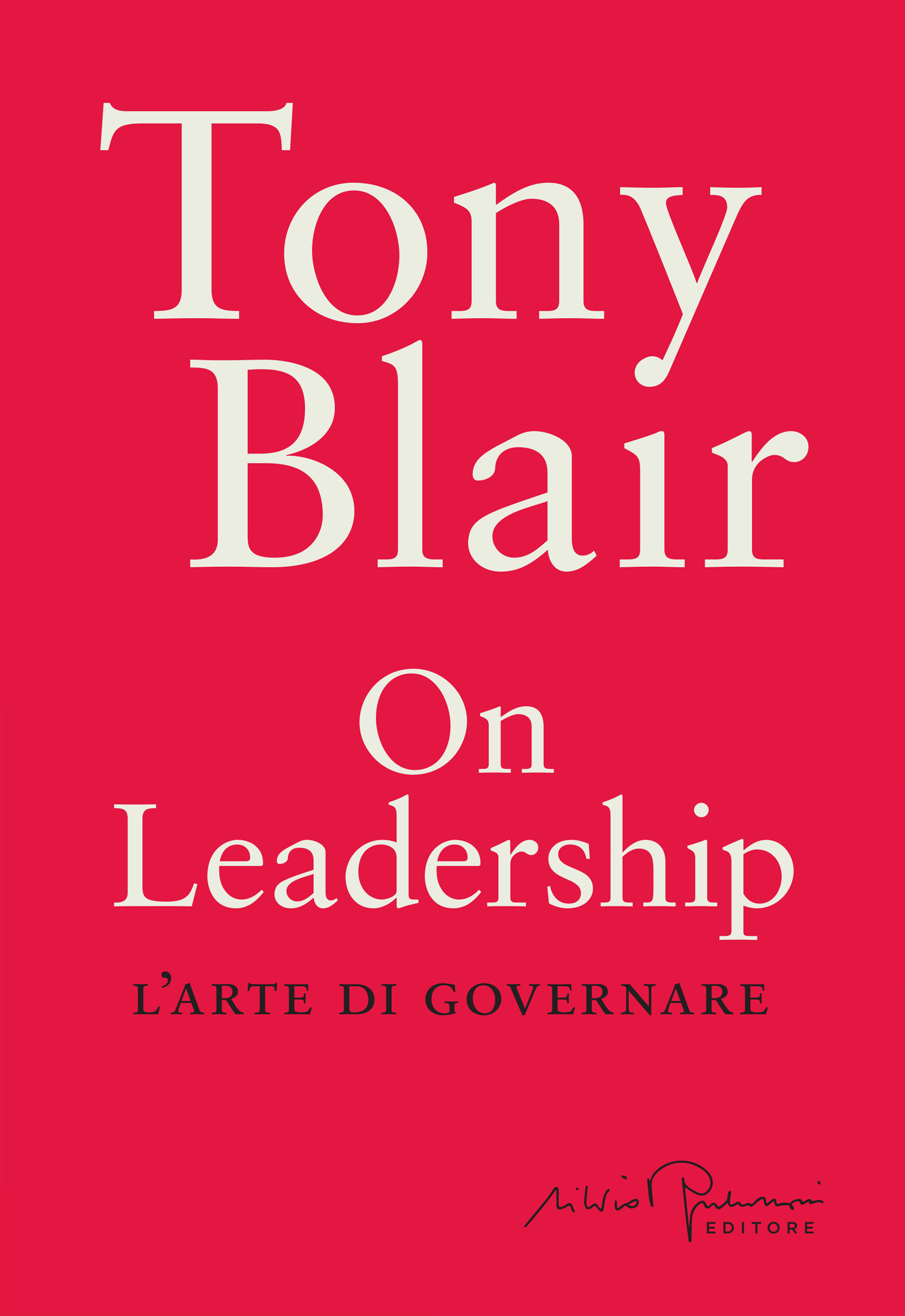
Tony Blair’s On Leadership, François Furet’s The Passing of an Illusion: The Idea of Communism in the Twentieth Century and Voltaire’s Letters on the English are the first three releases of the new publishing house.
Tony Blair’s On Leadership is part of the Libera series dedicated to works that discuss current affairs. Furet’s The Passing of an Illusion and Voltaire’s Letters on the English, translated into Italian for the first time by Antonio Gurrado, were conceived in the Biblioteca series, focusing on great classics that have stood the test of time.
How can we set priorities and deal with crises? How can we balance short-term victories with long-term structural changes? What is the best way to attract investment, to reform healthcare or education, and to ensure public safety? These are just some of the most significant questions that constitute the cornerstone of Tony Blair’s essay on the art of governing. The former British prime minister draws on more than a decade of experience in government, refusing to avoid the major issues that are still unresolved on the world stage and must be tackled head-on in order to assist the leaders of our time. The author’s track record, his commitment to supporting developing countries, working for peace in the Middle East and combating extremism have provided him with the tools to make a lucid and disenchanted judgement on today’s political situation. Never before has the quality of a nation’s government been as crucial to its success as it is today. There are countries that have the same population, similar resources and the same growth potential, yet some perform well, while others implode: the nature of leadership therefore becomes a decisive factor between growing and struggling states.
In On Leadership, technology is a voice in its own right, which is not considered one of the phenomena that leaders must manage, but rather the “epochal transformation” that affects all governments, which requires a decision on which side to take and whether to harbour outdated prejudices or to be open to change, first and foremost of ourselves. In chapter 19, we read: [generative AI represents] a radical alteration of the fundamental principles on which [the system] is based.” According to Blair, the technological revolution “makes it possible to implement measures that have real consequences in a reasonably short period of time – within an election cycle”, as “artificial intelligence is the only realistic way to improve productivity in the private sector [and] in the public service.” At the same time, Blair wants to emphasise that “it is up to each leader to decide how they want to use this all-encompassing revolution.”