New concept for Palazzo Niemeyer: redesigned spaces for the Mondadori Group headquarters
The goal of the project carried out by Generali Real Estate and the Mondadori Group was to enhance an iconic architectural work through innovation and sustainability
The project is signed by the international firm CRA–Carlo Ratti Associati
Palazzo Niemeyer, a masterpiece by Brazilian architect Oscar Niemeyer (1907–2012) and the headquarters of the Mondadori Group since 1975, has undergone a major renovation, including interior refurbishment and redevelopment.
Two key concepts guided the design of the project: identity and coherence. The goal was to enhance the building, in Segrate, on the outskirts of Milan, while respecting the distinctive character of Niemeyer’s work, reinterpreting it in a contemporary way through innovative, functional and sustainable solutions that strengthen the collaborative nature of the open space areas that were part of the original project.
“The redevelopment of Palazzo Niemeyer has been an important opportunity to give new life to, and celebrate fifty years after its inauguration, a place that is an integral part of our identity and our history, as well as an example of architecture of international relevance,” said Antonio Porro, CEO of the Mondadori Group. “This significant intervention has allowed us to make our headquarters even more efficient, sustainable and inclusive. It is a new working environment that reflects the values we embrace every day: openness, innovation and care for people,” Porro concluded.
The works, which covered a total area of more than 20,000 square meters, were carried out by Generali Real Estate – owner of the building through the Mascagni fund managed by Generali Real Estate SGR – together with the Mondadori Group.
“Palazzo Niemeyer is one of the most well-known and iconic buildings in Generali’s real estate portfolio. We are proud to have completed a high-quality project that has renewed the contemporary value of the building, bringing it in line with a more modern and flexible approach to workplaces and with new technological and energy solutions, while preserving its unique historical and architectural identity. I would like to thank our team, who brought expertise and passion to this important project,” said Benedetto Giustiniani, Head of Southern Europe Region at Generali Real Estate.
This major redevelopment project was designed by the international architecture firm CRA Carlo Ratti Associati, under the creative direction of Carlo Ratti, founding partner and curator of the 2025 Architecture Biennale, in collaboration with Italo Rota (1953–2024), one of the most influential interpreters of Italian architecture.
Their vision led to a radical reinterpretation of the office layout, addressing the needs that have emerged in recent years for coexistence between in-person work and flexibility.
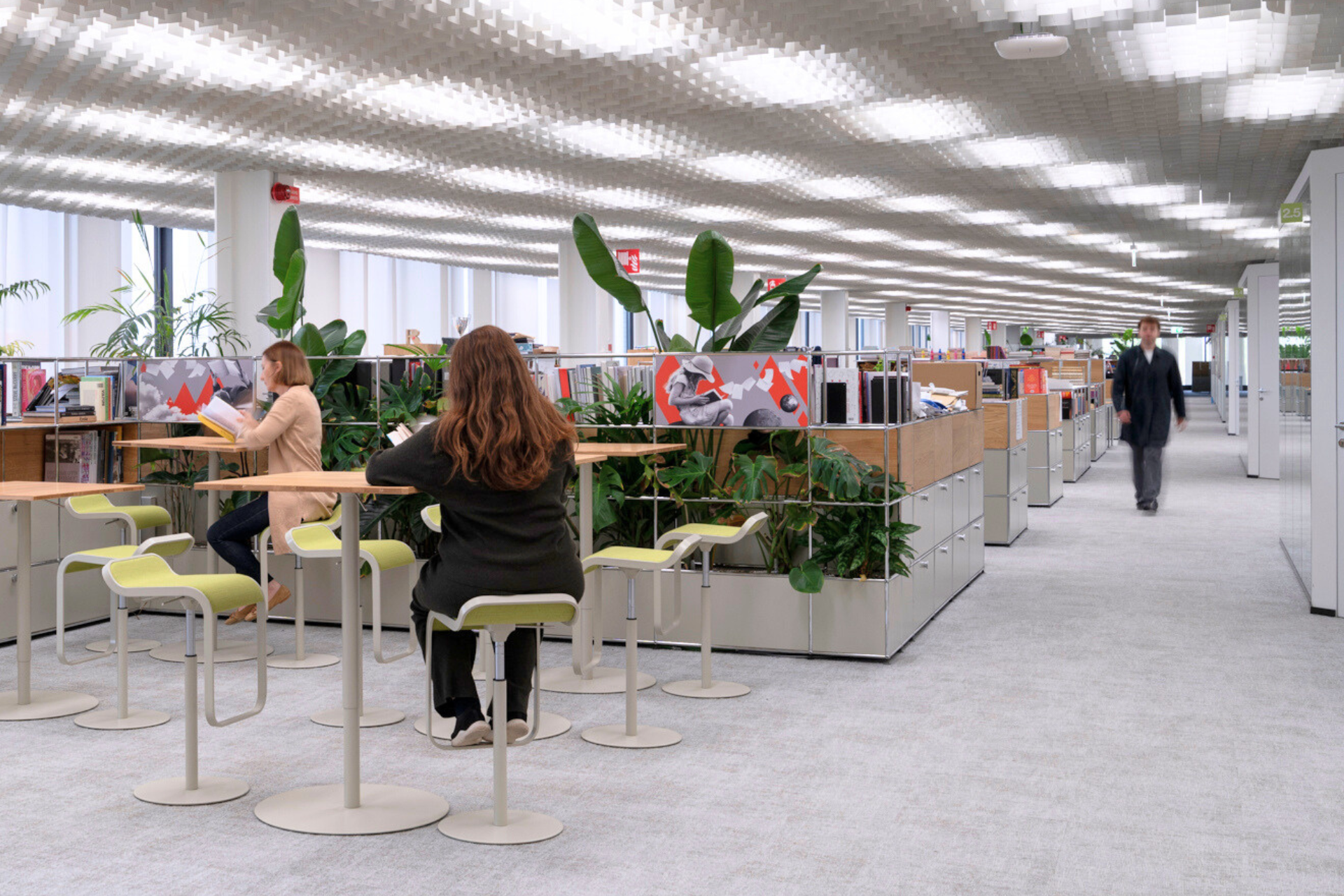
The spaces have been completely redesigned with new open space workstations that further encourage creativity and collaboration among colleagues, alongside shared areas, concentration zones and social spaces. The result is an open, fluid environment filled with greenery and in constant dialogue with the surrounding landscape.
«“To step outside the comfort zone of Zoom calls, we must redesign the office as a space that is worth the trip,” said Carlo Ratti, founding partner of CRA Carlo Ratti Associati. “Starting from Oscar Niemeyer’s iconic design and the USM furniture he selected, we dismantled and reassembled each piece in new configurations, integrating wood, recycled materials, nature and an exclusive selection of Italian design objects. The result? A catalog of environments, from open to more intimate, where everyone can find their comfort zone and where collaboration and innovation can truly flourish.
DESIGN PRINCIPLES
Launched in January 2023, the Palazzo Niemeyer redevelopment project is the result of collaboration between the Real Estate teams of the Mondadori Group, led by architect Chiara Capuzzi, Generali Real Estate, and the international studio CRA Carlo Ratti Associati.
The focus areas of the intervention were:
- The redesign of the interior layout across all five levels of the building, featuring flexible and multifunctional areas, open space workstations alternating with individual work zones, meeting rooms and phone booths equipped with the latest technologies, agoras, lounge areas, break spaces and service areas.
- Restoration and enhancement of the building’s original furniture, with the regeneration of more than 1,300 modules from Swiss manufacturer USM Haller, dismantled and reassembled, integrating wood and creating new types of furnishings.
- Special attention to natural light, acoustic comfort and visual continuity with the original park designed by landscape architect Pietro Porcinai, through solutions that help reduce environmental impact.
- The project also included upgrading and improving the energy efficiency of the systems according to energy-optimization criteria, eliminating the use of fossil fuels and making the building “Net Zero” in terms of CO2 emissions, with the goal of achieving LEED and WELL certifications.
Additional spaces have also been redeveloped in architectural continuity with the main building and Niemeyer’s original project, including the piazza facing Palazzo Niemeyer and the Centro Servizi, a circular structure overlooking the lake and park, which houses a café and a company restaurant. The restaurant has been made independently accessible, allowing more convenient and flexible use of the more than 5,000 square meters of multifunctional space.
Beyond Palazzo Niemeyer: redevelopment of the entire iconic campus
The drivers behind the redevelopment of Palazzo Niemeyer – employee wellbeing, environmental sustainability and energy efficiency – also guide the additional interventions planned across the rest of the iconic corporate campus. The aim of the redevelopment project initiated by Generali Real Estate is to further enhance the uniqueness of this green space on the edge of Milan, transforming it into a contemporary and sustainable workplace.
Between late 2025 and early 2026, work will focus primarily on Cascina Tregarezzo, a traditional Lombard rural farmhouse that has been expanded and redeveloped in a contemporary key. The integration of the historic building with glass structures and a steel portico has created a unique space where the charm of tradition is elevated by modern architecture. The current works, scheduled for completion in early 2026, aim at energy efficiency and decarbonization according to the highest standards (LEED certification is underway), as well as improving occupant wellbeing. The interior spaces, comprising about 4,000 square meters of offices over two floors, will also be made more flexible and accessible.